
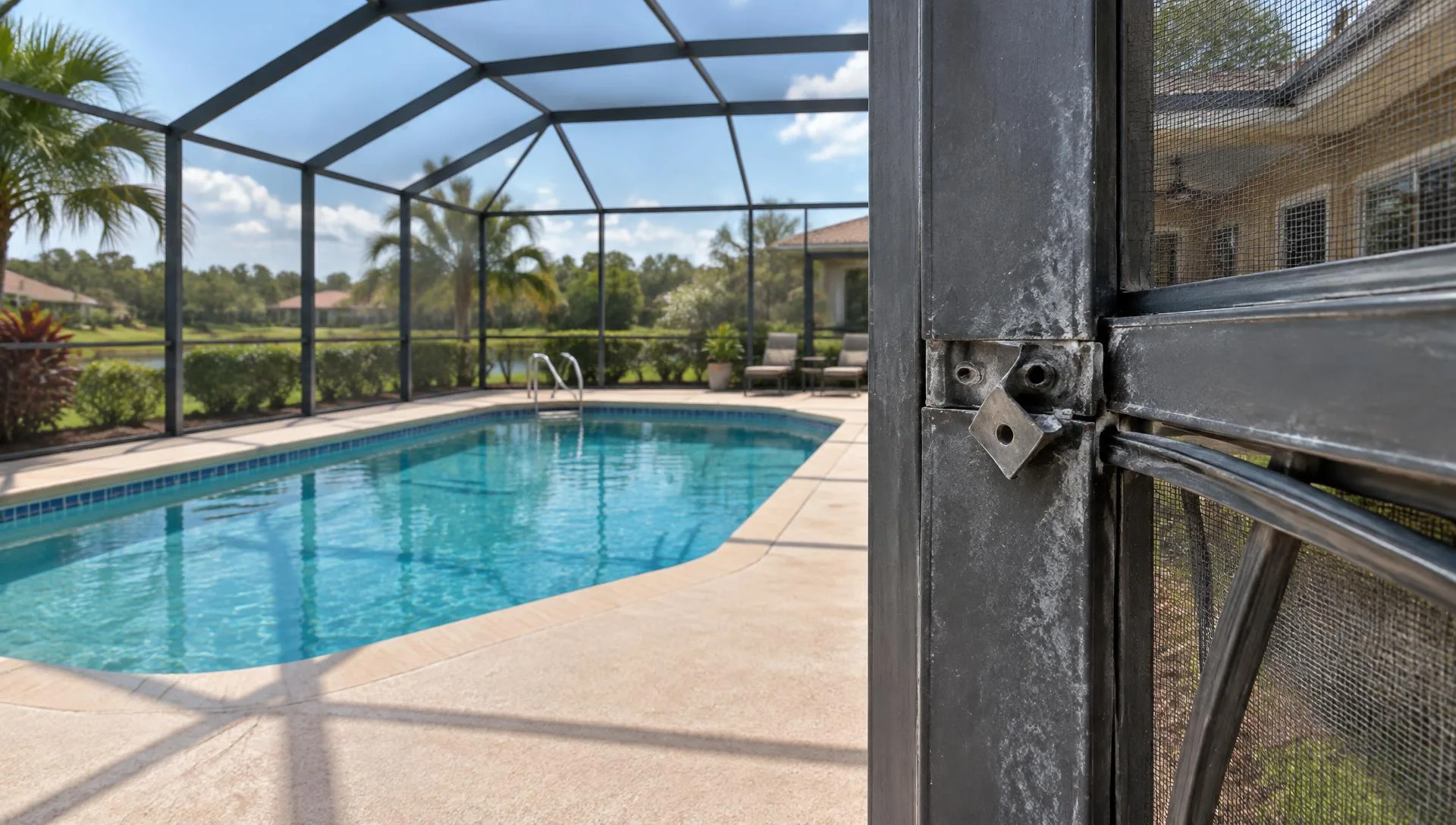
Pool Cage Repair & Restoration
Pool Cage Repair & Restoration in Brandon, FL
Attention to the existing frame, channels and door hardware—not just the mesh—helps an aging pool enclosure work as a complete outdoor space again.
Existing Enclosures
Look beyond the torn screen
A screen enclosure is a collection of parts that need to work together. Mesh depends on the channels that hold it, doors depend on their hinges and alignment, and framing connections affect how neatly each opening can be screened. When several of those parts show wear, replacing screen alone may leave the underlying problem unresolved.
Pool cage repair and restoration focuses on the enclosure you already have. We assess existing framing components, screen attachment areas and door hardware, then explain which repair work is appropriate for the condition found. The starting point is a careful look at the actual enclosure rather than an assumption that everything needs replacing.
This is different from a single torn screen panel. Localized mesh damage belongs to pool screen repair; broader component issues call for an enclosure-focused assessment. Tell us whether the problem is a loose connection, a door that catches, or screen that repeatedly pulls from the same channel. Those details help us understand what needs attention.
Component Assessment
What an existing cage may need
Framing and connections
Loose or damaged framing components can show up as visible movement, uneven openings or gaps around a joint. We inspect accessible connections and discuss repair possibilities for the existing components. A damaged member should not be hidden behind fresh screening; its condition needs to be understood first.
Spline and screen channels
Spline is the flexible strip that secures mesh in its channel. A worn strip may need replacement, but a damaged channel can prevent new spline from seating properly. Repeated trouble in one location is a reason to check both parts rather than simply tightening the screen again.
Doors and hardware
Screen doors have moving parts that the rest of the cage does not. Hinges, latches, closers and alignment all deserve attention when the door drags or will not meet its frame. We distinguish hardware issues from damage to the mesh in the door itself.
Restoration Decisions
Repair what is useful to retain
Restoration is not a promise to make an old enclosure equivalent to a new one. It means evaluating the existing parts, addressing appropriate repair items and coordinating screening around them. Some components can remain in service; others need attention before the screen can sit evenly. The estimate should make that distinction clear.
The scope does not include a brand-new pool cage, full aluminum enclosure replacement or engineered structural changes. If the condition points beyond our existing-component repair scope, we explain that limitation before proposing screening work. We do not describe ordinary screen or hardware repairs as engineering services.
If you also have a covered outdoor seating area, our patio screening service considers its existing structure separately. A patio and a pool enclosure can share screen materials without requiring the same repair approach.
Screen Coordination
Put component work before new mesh
Screen selection comes after understanding the enclosure. Standard screen may suit open views, while finer no-see-um mesh can help where tiny insects are a concern. Pet-resistant material may make sense near a frequently used door. The frame and attachment channels must be suitable for whichever material is selected.
When repairs and screening are both needed, we talk through the order of work. Correcting a channel or door issue before installing new mesh avoids treating a symptom while leaving its cause in place. If screen is brittle throughout the cage, broad rescreening is a separate decision from the component repair itself.
What to Expect
From estimate to finished screening
Describe the issue
Show us the affected connections, channels or doors and explain any changes you have noticed.
Review components
We assess the existing enclosure and separate mesh damage from component and hardware problems.
Agree on scope
Appropriate repairs and any coordinated screening are discussed before work begins.
Check the result
We review the repaired areas and door operation, and remove discarded repair materials.
Brandon Conditions
Wear shows up in different ways
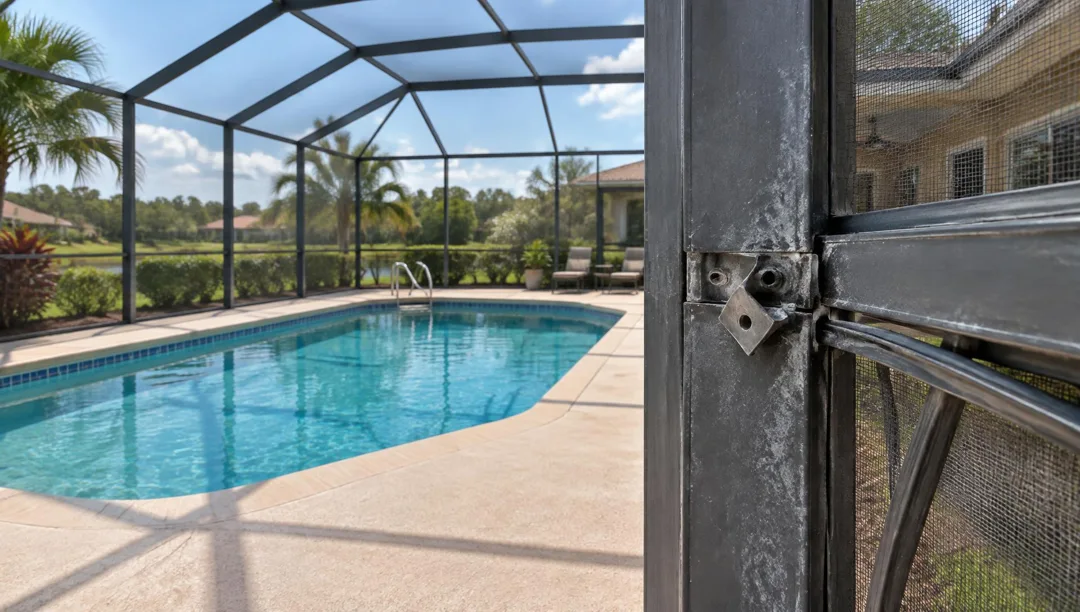
Florida humidity, rain and everyday exposure can leave deposits around enclosure joints and moving hardware. Poolside moisture and accumulated debris may make wear harder to see. Sun ages the screen and spline, while branches or objects blown against an enclosure can damage more than the mesh.
From ground level, note changes after a storm once it is safe: a door that suddenly catches, a gap at a connection or spline hanging from a familiar problem area. Do not climb the cage or pull on damaged framing to test it. Share what you can see and let the estimate establish the next step.
Before the Visit
Make the assessment more useful
Think about when you first noticed the problem and whether it has changed. A door that has always rubbed may need a different assessment from one that shifted after debris struck the enclosure. Mention previous repairs and any areas where screen repeatedly loosens; that history helps connect the visible symptoms.
Keep access to doors and affected ground-level panels clear where practical. There is no need to dismantle hardware or remove mesh before we visit. We can discuss the enclosure as it stands, explain the repair scope and help you decide whether screening should be part of the same work.
Related Services
You may also be considering
Free Estimate
Discuss your existing pool cage
Tell us which parts of the enclosure need attention. We will arrange a free estimate and explain appropriate repair and screening options.